While many sustainable investors and environmental groups were dismayed by the recent US election results, it is important to recognise that the election of Donald Trump—and to a large extent Brexit in the UK—reflects a growing unhappiness and dissatisfaction on the part of millions of people who feel that existing financial systems, policymakers and structures are not working in their favour.

The PRI recognises that many people across the world feel left behind by globalisation and are still feeling the outcomes of the global financial crisis.

They have seen Wall Street bailed out, while they have been left with the bill, and to struggle with cuts in services, the loss of jobs and real wages in decline.

People are looking for something different, for markets and a system that works for them, not against them, which is why the PRI is undertaking work, in collaboration with our signatories, on creating a more sustainable financial system.

This work aligns closely with the PRI’s mission, which calls for it to promote a sustainable global financial system that supports long-term value creation and benefits the environment and society as a whole. It also aligns to the UN Sustainable Development Goals (SDGs) announced last year, notably, SDG1, whereby a healthy financial system can help curb income inequality.

On a practical level, convincing the President-elect that his mandate to stimulate growth and re-energise the job market by improving ageing US infrastructure would benefit from a sustainable focus is a challenge that investors groups should rise to.

No one can dispute that America’s dilapidated roadways, bridges, waterways, electricity grid, telecommunications and other essential services are desperately in need of modernisation.

The American Society of Civil Engineers has estimated that $3.6 trillion would need to be invested in US infrastructure by 2020 just to raise the country’s support systems to acceptable levels. From a commerce standpoint, America’s crumbling infrastructure is undermining its productivity and competitiveness.

A smart way for the President-elect to begin his mandate would be to invest in sustainable infrastructure projects that create jobs and use the latest technologies and innovation but do not harm the environment and are “climate proofed” for the future. The commercial reality is that, given investors are adapting to the “new normal” of a low/no return environment, marrying patient capital with long-term sustainable investing makes perfect sense.

Another opportunity is construction. Buildings are responsible for an enormous amount of global energy use, resource consumption and greenhouse gas emissions. In the US, buildings account for almost 40 per cent of national CO2 emissions and out-consume both the industrial and transportation sectors.

Trump has built his fortune as a property tycoon and investors are keenly aware that ensuring buildings are constructed to the highest environmental standards results in longer term profitability. As the demand for more sustainable building options increases, green construction is becoming increasingly profitable and desirable in commercial, industrial and residential markets. Global property developers appreciate that well-constructed and efficiently-run buildings will have reduced energy costs, attract responsible long-term investors and be able to command the highest rents.

Then there are the declining costs of clean energy and the fact that the renewable energy sector continues to be a bright spot for job creation.  According to the International Renewable Energy Association, global renewable energy employment increased by 5 per cent in 2015 to reach 8.1 million jobs.

It is through infrastructure upgrades and green property that the Trump administration may come round to the sustainability agenda by recognising the commercial realities and requirements of today’s investors.

It is also worth remembering that individual states in the US such as California—which has adopted higher emissions reductions targets than those set at the federal level—Vermont, Washington, New York, Oregon and a host of other states have strong climate policies in place, which will be independent of policies at the federal level. Climate-change related occurrences such as storm surges are expected to cause more than $500 billion in property damage in the US by the year 2100.

Before his inauguration on January 21, the President-elect has already felt pressure from businesses to stay the US course on climate change.  At COP 22, 360 businesses, including DuPont, Gap Inc, General Mills, Hewlett Packard Enterprises, Hilton, HP Inc., and Kellogg Company to name a few, urged Trump to honour the Paris climate agreement and continue to support bold action to reduce emissions.


China in the ascendancy on green finance

But regardless of what happens in the US, other countries are not standing still on climate policies.  During COP22, China renewed its commitment to reducing emissions and to its wider green finance agenda. Xie Zhenhua, China’s special representative for climate change, noted in a speech that climate and green investment has a vital role to play in transforming China’s economic structure.

Zhenhua further said that co-ordination is needed to attract green investment and that policymakers need to work out both economic and environmental policies. This includes promoting innovative, high-tech industries.

China’s leadership on green finance raises another issue for the US, namely, that the US will not want to get left behind and watch other countries surge ahead in green design, technology and innovation, all of which are fundamental to a dynamic economic future.

China was not the only country at COP22 to speak out on the momentum around climate initiatives.  French President Francois Hollande said the Paris Agreement “is irreversible”.

In a speech at COP22, he said: “The United States the first economy in the world, second emitter of greenhouse gases, must respect the commitments that were made.”


The PRI spearheads new initiatives on climate change

Amid the COP22 backdrop, it was a busy time for the PRI.  We launched new guidance, Green equity investing, at a Chinese government event and formally announced a deforestation partnership with Ceres, and supported the launch of a UN Global Compact platform to mobilise business action to support The Paris Agreement. We also participated in a Sustainable Stock Exchanges session, Fostering Green Capital Markets in the South, during which we called on exchanges to support the FSB Task Force Disclosure Framework and promote green investment.

Looking ahead, the FSB Task Force on Climate-related Financial Disclosures – of which the PRI chair is a member – will release draft recommendations on company disclosure on climate change on 14 December. Ensuring that investors have consistent and reliable data on how companies are addressing the material financial risks around climate change, is vital to making sound investment decisions.

The PRI encourages corporates and investors, both large and small, to engage the new US administration, not only because they appreciate the issues at stake, but because they can speak to the President-elect in language that he will understand.

Direct engagement is now the task at hand, so let’s focus on the opportunities to move the sustainability agenda forward.

Institutional investors are, in general, very long term in nature because the obligations they are aiming to meet are due many years or decades hence. Such institutions are natural investors in equities, expecting to benefit from relatively high returns driven by long-term corporate profit and dividend growth.

An approach focused on capturing this profit and growth by making investments with low turnover — in relatively stable portfolios of underlying companies held over long periods of time — could be described as long-horizon investing.

In practice, equity manager turnover shows that portfolios aren’t very stable and underlying companies are generally held for short periods (often less than two years).

Of course, such averages can be misleading. In this case, the averages likely disguise what can be thought of as two styles of equity investing — managers who identify share prices they think will go up (by more than the market), and managers who identify companies they believe will grow (by more than the market expects) over the long term.

For many institutional investors, the second type of manager approach (which might crudely be considered as investing rather than speculation) is more naturally aligned with their own long-term investment horizon. Critically, it is also consistent with their underlying raison d’etre – to ‘grow’ the savings pool sustainably by investing in equities. But do such long-horizon managers really exist and can they be readily identified?

The answer is undoubtedly yes. Managers which focus on buying companies for the long term do exist, though they are rarer than one might expect. Warren Buffet’s approach of buying wonderful businesses at fair prices and holding them forever is relevant here. But this brings up additional questions:

  1. Do such great businesses exist? Answer: probably yes.
  2. Are they sufficiently stable and enduring that ‘holding them forever’ (say for 10 years or more) is a viable strategy? Again, the answer is probably yes, although with less certainty than the answer to question 1. Through changing external or internal circumstances, great companies may not persist for an extended period of time (because the product they sell becomes obsolete, for example).
  3. Is holding them forever regardless of price a realistic strategy? Even the greatest company can become overvalued relative to its realistic future growth prospects. Should the manager ignore this overpricing and continue to hold the company even though it’s likely to underperform over an extended period as the overpricing corrects? Or would it be more prudent and pragmatic to take some profits and invest in other great companies that aren’t as overvalued?

The true long-horizon investor will probably agree that a) the company is held for its long-term growth not its shorter-term share price performance, and b) great companies are so thin on the ground that one would need to think very carefully about disposing of one in favour of other opportunities if the risk is that it proves impossible to buy the company back at a reasonable price (because it remains overvalued or becomes even more so).


Two categories of long-horizon investor

There are arguably two distinctive styles of long-horizon equity investor.

A majority of the managers would focus on those companies that are high quality with strong brands, large market shares, high barriers to entry, low operational gearing, and robust balance sheets.

Such companies should have the ability to earn higher rates of return on capital employed ad infinitum (or at least over many years). This has tended to be a successful investment strategy because the majority of other investors assume that the returns earned by these companies will eventually return to the average rate, whereas the long-term investor has confidence that these businesses will ‘beat the fade’.

The second type of long-horizon investor is almost completely different.

This type of manager buys companies that he or she expects to grow to a much greater extent than the market currently believes. These companies will already have been identified as high growth companies by the market but this type of manager believes that the market lacks the imagination or time horizon to understand how fast and for how long these businesses can actually grow.

What the two approaches have in common is a much longer time horizon than the market generally. The success of these approaches is not going to be appropriately assessed by considering the movement of share prices over short or even medium time periods, whether in absolute or benchmark-relative terms. What happens to share prices along the way is arguably just noise.

Knowing what success looks like

Measuring performance by comparing share price performance with the market average over short periods of time is likely to be fruitless at best, or misleading at worst. But we do need to find a way of measuring how the portfolio of shares is progressing – is it ‘on track’ or has it ‘gone off the rails’?

For the first ‘compounding’ group this is probably not too difficult. It should be possible to look at the whole of the portfolio and measure it as if it were a single company, looking at whether, for example, dividends had increased, return on capital employed had grown, and if the balance sheet had remained strong, with the deliberate use of a combination of measures that are naturally in tension and therefore cannot be easily manipulated either by the asset manager or the managers of the companies in the portfolio.

For the second type of manager, which invests in what might be called ‘transformational growth’ companies, the same type of measurement approach is not going to work.

Companies growing at very rapid rates are unlikely to see dividends at all or neatly corresponding returns on capital employed.

For these companies, more of a private equity approach is likely to be required. When the manager acquires shares in the company, what are his/her expectations for growth, and how do these compare with the company’s business plan?

The manager should then be prepared to report on whether the companies in the portfolio are in line with, ahead of, or behind expectations, and why.

The establishment of a monitoring process that works for both investor and manager should enrich the debate at the outset of the mandate, align investors and managers more closely, and make for a much better informed discussion about portfolio performance, ultimately leading to good long-term relationships and superior long-term performance.

Nick Sykes is director, manager research at Mercer


Gone are the days of managing risks and rewards at a portfolio level; investors are adopting a so-called ‘systems level thinking’, investing in line with a broader understanding of their ability to impact the world around them and to influence the shape of the future that will, in turn, impact their portfolios.

So argues a new report, Tipping Points 2016: Summary of 50 Asset Owners’ and Managers’ Approach to Investing in Global Systems from The Investment Integration Project (TIIP), and supported by the New York-based Investor Responsibility Research Centre Institute (IRRCi).

Gathering data from a diverse set of 50 asset owners and managers, with combined assets under management of $17.3 trillion, the authors find more investors are intentionally pursuing strategies that tie portfolio-level decision-making to systems level risks and opportunities.

It’s an important part of the advancement that finance appears to be taking as it contends with an evolving world, explains IRRCi executive director Jon Lukomnik.

“It has been more than a half century since Harry Markowitz popularised diversification and portfolio level investing, for which he later won a Nobel Prize,” Lukomnik says.

“Since then, capital markets around the world have changed dramatically, and the global financial crisis was a game changing wake-up call. Against this dynamic backdrop, investors are evolving and realising that global financial, environmental and social systems have major ramifications on their investments and simultaneously, their investments have deep impacts on those systems.

“The report illustrates the new policies and practices that investors are embedding into their business culture and investment strategies. We now have concrete evidence that investors are intentionally confronting global environmental, social and financial systems challenges in a way that makes financial sense,” he says.

Key catalysts behind the changing investment culture include industry-led initiatives like the UN-backed Principles of Responsible Investment, a network of more than 1500 investors working to create a sustainable financial system.

The Task Force on Climate Related Financial Disclosures, which aims for companies to voluntarily produce climate-related financial risk disclosure for the investor community, is another force of change.

The report finds investors are motivated to invest at a systems level by risk reduction and financial returns; a desire to contribute positively to society as well as public pressure and legislation.

It highlights the steps investors are taking towards systems-level investing in what it calls “on ramps”. ESG integration, prioritising long-term value creation, impact investment, exclusion or screening, the careful selection of managers and investment stewardship are typical “on ramps” that lead to a systems-level investment approach.

Pathways

The report also identifies deliberate strategies among its sampled investors to pursue big-picture strategies, counting 10 “pathways” via which investors express what it calls “intentionality”. It is through these pathways that investors bridge the gap between their daily portfolio management decision-making, to facilitate impact at a systems level.

The pathways include:

Additionality: Where investors pursue opportunities with competitive returns in markets that are currently underserved.

Diversity of Approach: Where investors consider a diverse set of system-level risks. Climate change, for example, is an area where an investor might adopt a diversity of approaches via divestment, engagement or investing in alternative energy.

Evaluation: Where investors place a financial value on environmental and societal systems. America’s biggest pension fund, California Public Employees’ Retirement System adopted the investment belief – one of 10 – that long-term value creation requires effective management of financial, physical and human capital; another belief at the fund articulates that risk is “multifaceted” including issues not measured by tracking error and volatility, like climate change, demographics and resource scarcity.

Geographic Locality: Where investors buy connected assets in the same geography. This could include endowments committed to serving communities, or investing to support local economic growth as demonstrated by Ireland’s €7.6 billion ($8.3 billion) Strategic Investment Fund. Similarly Canada’s $254.9 billion Caisse de dépôt et placement du Québec includes investment in Quebec businesses, infrastructure and public transportation in its global portfolio.

Solutions: Where investors create investment vehicles that target solutions. This is a strategy pursued by the Dutch pension fund manager PGGM when it allocated a multi-billion dollar portion of its assets to what it describes as a “solutions” or “impact” portfolio. Here the focus is on four issues where it believes it has particular expertise and can effectively address fundamental environmental and social systemic challenges – climate change, food, healthcare and water.

Successes and challenges

The report finds that investors are successfully integrating ESG into their investment strategies, along with developing investment products that target environmental and societal issues.

Similarly, respondents reported success in meeting specific goals, like reducing exposure to risk or allocating assets to a solutions-orientated portfolio.

However, challenges include the varying quality and availability of data, particularly from investee companies. The need to educate staff, clients and other stakeholders on systems-related considerations, and how to measure the true impact from ESG or other systems-level investments was also cited as a challenge.

Here the report authors highlight the need for more support for asset owners and managers in measuring and reporting on the effectiveness of their individual and collective policies at a systems level. Owners and managers would also benefit from identifying opportunities for collective action, it says.

“A lot of work is left to be done to better understand the complex relationship between systems and portfolios. But, this study demonstrates that institutional investors, whether implicitly or explicitly, understand that the world is becoming increasingly interconnected,” TIPP’s William Burckart, report co-author says.

“Previously, investors could find ways to insulate their portfolios from certain global events. Today, even seemingly “local” events can immediately and adversely affect all portfolios. Because the largest and most influential investors are recognising this trend and beginning to consider the connection between planetary systems under stress and adversely effected portfolio performance, we are looking at a potentially critical shift in the evolution of investment.”

Intentional steps towards positive impact at a systems level may still be hesitant, taken by relatively few investors, unclear, or lack consistent articulation.

But they are an important part of the evolution as finance contends with the realities of volatile financial markets, social needs and environmental instability.

The concept among asset owners that they are universal investors with responsibility for the vitality of the whole economy has taken root. And with it the knowledge that what happens at a systems level will impact the value of their portfolios.

Almost a year on from the launch of its private equity reporting template on fees, expenses and carried interest, the Washington-based Institutional Limited Partners Association (ILPA) reports “significant progress” in the template’s adoption.

The $178.6 billion New York State Common Retirement Fund (NYSCRF) has made fee disclosure via the template a condition of investment in all new private equity funds.

“We require the managers of all new commitments to use the ILPA template,” said a spokesperson for the fund, which has 7.8 per cent of assets in private equity.

“Over half of our managers are either using the ILPA template or are working to use the ILPA template.”

However, he says managers with older funds tend not to report in the ILPA format, although the Common Retirement Fund is “working with these managers to improve their reporting standards.”

ILPA’s template requires GPs flag carry fees but also capture expenses and the incentive allocation paid to managers and their affiliates.

This means investors can compare fund performance going back to inception, plus a whole range of advisory, placement and deal fees.

The idea is this data will support LPs’ internal allocation decisions, help steer their manager selection processes and will feed up into top line organisational assessments of value across the portfolio. It is the kind of transparency investors hope will help them to both negotiate better deals and level the playing field which currently lets the biggest LPs, with the best relationships, also get the best deals.

Head of private equity at the UK’s USS, Geoffrey Geiger, says the template, or equivalent disclosure, is now a condition of investment.

“We support a voluntary approach to adopting the template, the PE industry came up with its own solution to concerns around transparency on fees and we think it works well.  It is in the GPs’ and LPs’ mutual interest to use the template, and as more GPs develop the systems to comply with the template and LPs become accustomed to receiving the data, it will just become part of the process.”

“The template, or equivalent disclosure, is now a condition of investment; as we negotiate with our GPs we are using the template with GPs. We find that we get high levels of disclosure as a result, and more than what has been reported on in the industry.”

A number of leading general partners (GPs) have now also publicly backed the initiative, as well as a large and growing number of limited partners (LPs) and service providers, says the organisation that represents some 300 institutional investors in private equity.

“As the initiative builds a real head of steam with support from all corners of the asset class, we are on the cusp of meaningful change that is in the long-term best interests of all industry participants,” says Peter Freire, ILPA CEO.

The aim of the fee template is to establish more robust and consistent standards for fee and expense reporting and compliance disclosures among investors, fund managers and their advisers. The template is the industry’s own response to growing criticism of private equity fees from regulators, trustees and beneficiaries, with private equity increasingly perceived as a grey area that allows managers to charge investors and pension funds hidden and backdoor fees.

“The evidence suggests that template adoption is gaining momentum. More GPs are officially endorsing the template and even more are providing the template data unofficially by making it available to LPs that request it. On top of the GPs already offering – or gearing up to offer – the template, we have more than 100 LPs asking for it, and in many cases making it a condition of doing business,” Friere says. “This building momentum around adopting the template makes complete sense: notwithstanding near-term (and very real) implementation costs, the long-term benefits of a single, industry-wide standard for all – GPs and LPs – are self-evident.”

Private equity has always been one of the most expensive asset classes for investors. It remains to be seen whether the greater fee transparency will translate into an ability among LPs to put pressure on fees.

“It is too early to tell,” said the NYSCRF spokesman.

ILPA’s Freire agrees: “It’s too early to tell how the template’s adoption will impact what the market will bear in terms of fees. To the extent that greater transparency helps LPs in negotiating fair and reasonable fees, any such impact would likely not be apparent until late 2017 at the earliest, when detailed reporting for recent vintages becomes more widely available and the ILPA template becomes a more widespread feature in newly negotiated LPAs.”


A two-year transition

Due to the long-term nature of private equity funds, and the complexity surrounding the technology required to automate the production of this data, a full transition to using the template is expected to take up to two years.

Several of the endorsing GPs expect to begin producing the template data for LPs, requesting it as early as the first half of 2017, says ILPA.

Despite progress, some funds report slow progress when it comes to persuading GPs to use the template and simplify their fee structure.

“Things are improving but it is a slow process. Some of our managers have been very constructive, but not all. A common response from managers is that they don’t see other LPs asking for it, even though we find that hard to believe. I think it’s likely that we would make filling out the template a condition of future PE commitments,” says James Duberly, director, pensions investments at the UK’s £12.5 billion ($18.8 billion) BBC Pension Trust with a 5 per cent allocation to private equity.

So far 33 LP organisations have publicly endorsed the template.

The latest prominent GPs to publicly back it include Advent International, Apollo, Blackstone, CCMP, Hellman & Friedman, KKR and Silver Lake. They join The Carlyle Group and TPG.

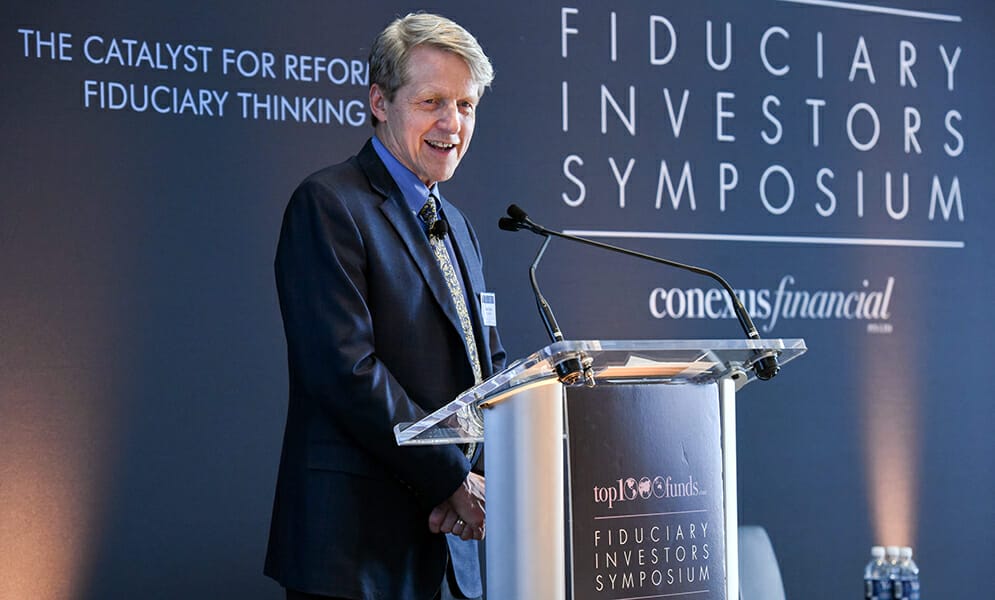
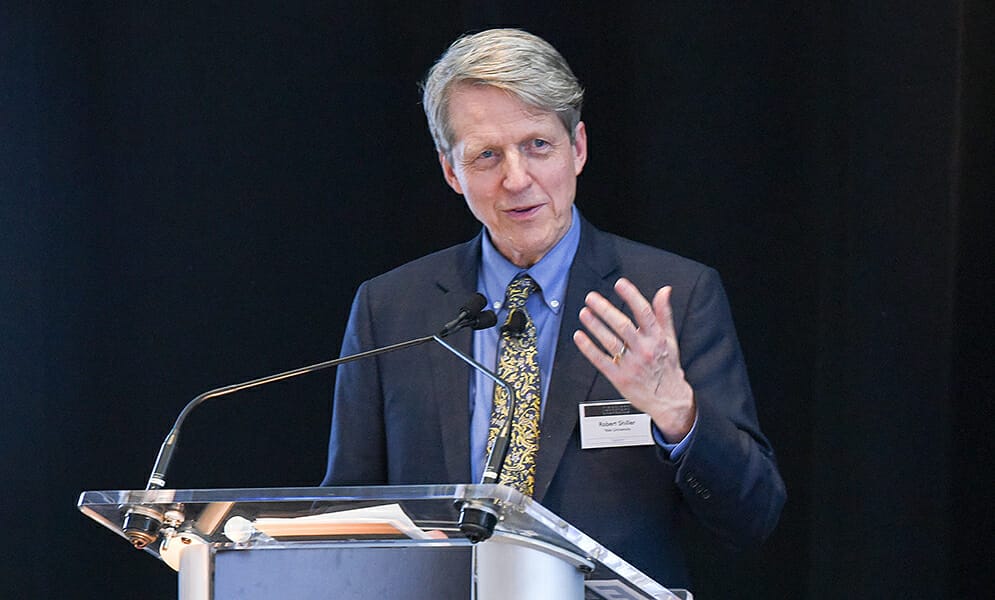
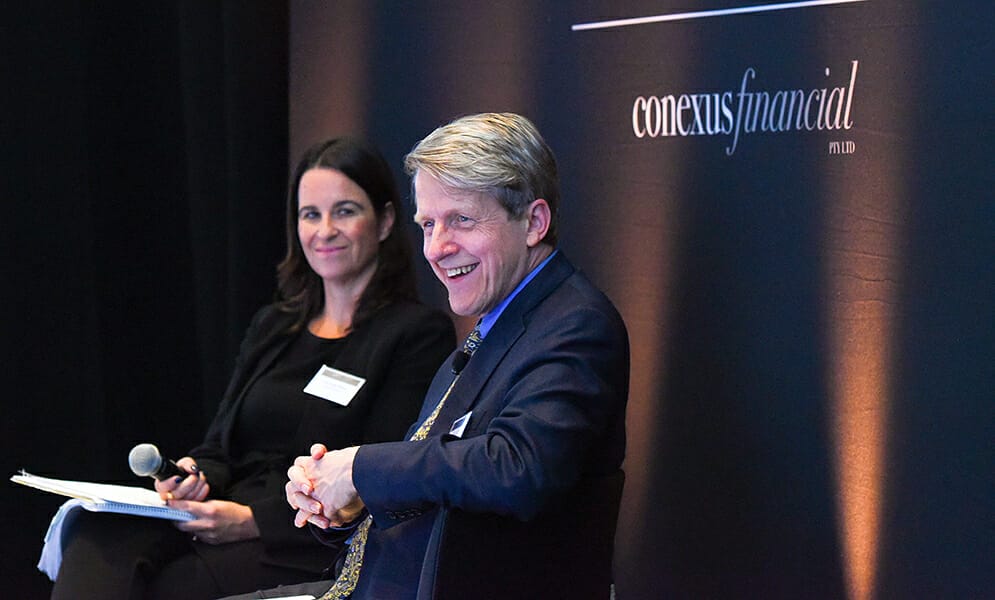
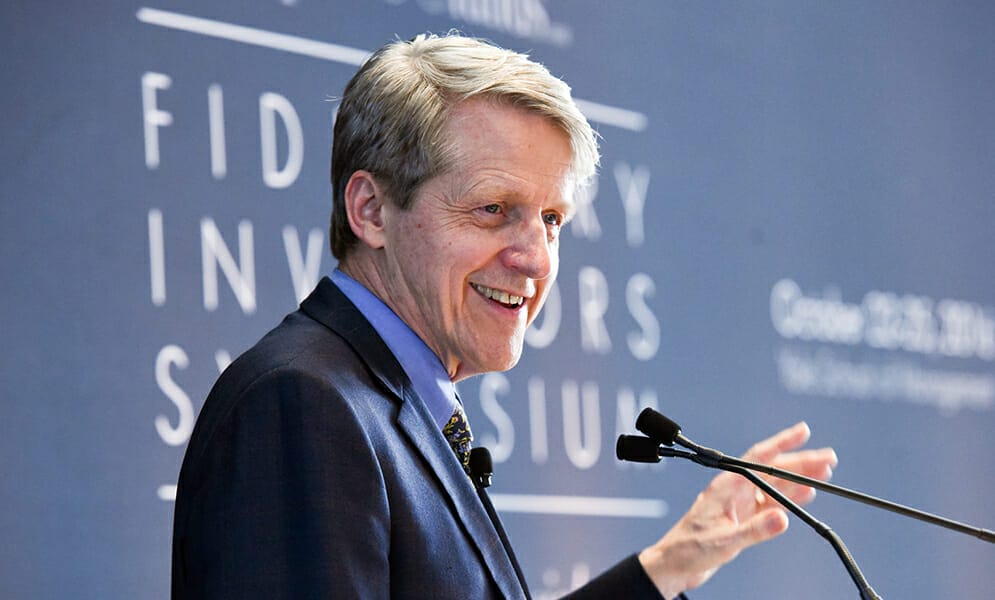
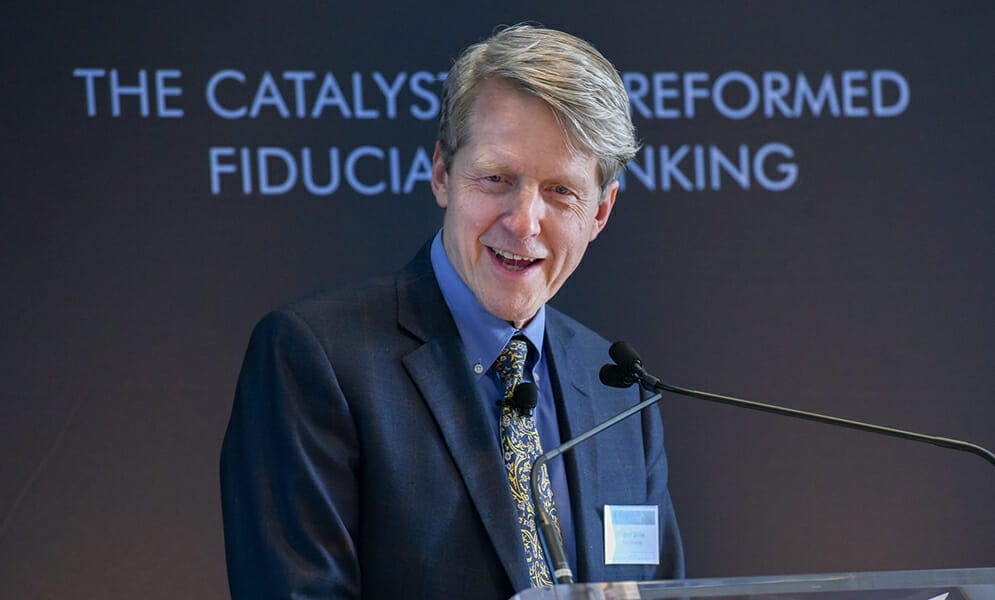
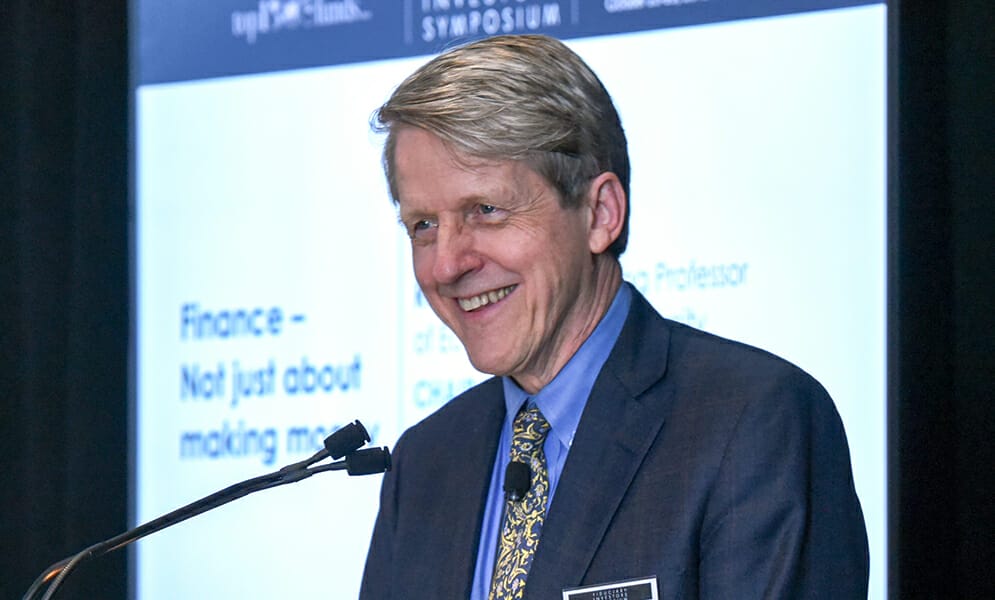
At the Fiduciary Investors Symposium at the Yale School of Management, Professor Robert Shiller reminded delegates that “finance is not just about making money”. The Sterling Professor of Economics at Yale University, Shiller warned of the tech bubble and and the housing bubble, and is the author of Irrational Exuberance. He won the 2013 Nobel Prize in Economics, alongside Eugene Fama and Lars Pete Hansen of the University of Chicago. This is an excerpt of his speech where he discusses financial innovation and the role of finance in society.


In the epilogue to my book [Finance and the Good Society] I say, finance, financial theory is a thing of beauty. When you read about a general equilibrium in financial markets where prices reflect scarcity, they sum up the demand of everybody and they put a number on it so that the scarce resource can be suitably distributed among its various uses and not squandered. And how it takes into account all of the demands and desires of people – you don’t even know them, you’ve never met them; it is a thing of beauty.

This leads some people however to worship the structure a little bit too much, because the financial theory, which I love and admire, is only a half-truth anyway. So this reminds me of your speaker from a year ago, Eugene Fama, who I think he and I agree on just about all of the facts but we differ on the interpretation. And he wants to give efficient markets a benefit of the doubt. Okay well let him do that but I doubt that markets are efficient so it’s not perfect. And there’s a bigger human element than you might imagine. So I’ve been involved with behavioural finance now for 30 years with a growing group of finance theorists.

I’m married to a psychologist as well. I think the field of neuroscience is just as revolutionary as the field of artificial intelligence because it’s changing our view of ourselves, and so we don’t fit the theoretical model of finance.

Paul Glimcher, who’s a Professor of Neural Science at New York University, wrote a book called Neuroeconomics, and he said anything that people are presumed to be doing must have a brain structure that supports it. So he wants to find out. And he says that economic theory supposes that people consistently maximise a utility function – expected utility function. That’s a pretty complicated thing to deal with. Maximise an expected utility function, subject to a budget constraint. So he says, “I want to know where in the brain that happens”. So to make a long story short, he hasn’t found it yet.

I mentioned that in my book I talk about financial professions. And I mentioned some that are not uniformly loved. But again I’m not an apologist for these people. But I also feel that they do have a position in our civil society. So let me talk, first of all, about the least loved financial profession. That’s the financial lobbyist.

In our book Phishing for Fools George [Akerlof] and I talk about lobbyists as actually having an important part of our rule making. Because congressmen are really public people that have very little time to think about policy. And lobbyists come in. They like lobbyists that are not totally dishonest; that’s why a lobbyist has to say no to some requests. He actually has a moral purpose. So maybe I didn’t convince you, but I think that there are good lobbyists. And that they are part of what makes the system work. Because the only problem with our system is if there’s an imbalance – if certain social groups have more lobbyists or more expensive lobbyists than others. But if every group has a lobbyist representing and these lobbyists have some sense of praiseworthiness as I think they do, then I think they’re a positive.

I wanted to talk about some innovations. In order to make civil society work, it’s like an engine. It has to be tuned right and managed right. And so in history there are various people with a civil society mode of thinking who propose innovations.

In Amsterdam in 1602 they set up the first stock market that really had daily trading. And they had shares held in a street name so that you didn’t have to go through all the reporting every day when shares are traded. And then the newspapers of the day, actually they weren’t newspapers yet in 1602, they were coming soon though; by the 1610s Holland had the world’s first real newspaper, so they would tell you the price of the Dutch East India Company in their newspaper. Now that is an innovation, which I think was very public spirited and it involved legal changes that allowed this to happen. But what it meant is that organisations could be valued in a marketplace, the value would be known by everybody and it provided incentives to take part in a risky venture that you couldn’t have taken part of in such a flexible way until then. It’s an interesting story because they had a short sale crisis in, I think it was 1609, and they temporarily outlawed short sales. So the invention had its problems.

Then in 1811 New York securities law was the first to really establish limited liability as a clear principle for all stock contracts, which was an adventuresome innovation. It brought us on the edge though because if you have limited liability that means you can’t put corporate executives in jail for their mistakes. And it looked like a bad idea because they thought it would lead to too many disruptive and dishonest businesses. But somehow it didn’t.

Another example is index debt; inflation index debt was first invented, as far as I can tell, in 1780 in the state of Massachusetts for a revolutionary war. And they invented a consumer price index to underlie the debt.

Other adventures are more recent. Ethical investing – I’m not sure that’s an invention. The benefit corporation is an invention of the last decade; we have non-profits and we have for-profits and it involves something slightly between that.

Another invention that I think is coming out of civil society again, which hasn’t happened yet on any scale, is GDP-linked debt – something I’ve been advocating. But I’m discovering that other people are advocating it too. It’s because it’s a risk-sharing device between countries and between investors and governments. So these are innovations that, they don’t seem to happen by the profit motive alone. They happen when there is someone in civil society advocating them.

I think that this is a particularly risky time in history. Where our risk of inequality is great because people’s sources of incomes are rapidly being challenged. But at the same time I think we’re more understanding of the role of psychology and the functioning of our institutions, and we have to think through how we can be part of civil society; how we can make financial institutions that function better with real people, but don’t get too cynical about their manipulative-ness but are also not unmindful of the deep desire people have to be praiseworthy.

We have a celebrity society, where people are admired who are not really doing much. So we’re living in a social media age where certain things go viral. So, how to engineer around that? I mentioned the benefit corporation, which is a new thing that is in the United States primarily. I don’t know what other country has it yet; it’s only a few years old. But a benefit corporation has in its charter a profit motive, but also some other stated motive like the environment or alleviating poverty or creating opportunity. But the company writes that in itself and then it becomes part of company culture hopefully.

Now, how they weigh the conflicting objectives is not defined in the law, but you just have to pay attention to both of them. But the idea that your company has a moral purpose may change their whole environment. Now, making money might be described as a moral purpose but it’s kind of tainted in some people’s eyes. There should be some other moral purpose. A lot of the states have a requirement that the company issue every year a benefit report – what they’ve done to fulfil their social or environmental goal. The question is, would you rather work for a company like that or one that was strictly for money?

To the extent that their clients allow them to, asset managers and asset owners should incorporate ESG. I would. I think in the long run, the question is, ‘how big a hit does it take on your profits?’ You might not want to invest in certain companies that are morally challenged. And I can live with that. I’d expect maybe a somewhat lower return. On the other hand I’m not even sure it will have a lower return. Because it puts you in a different space and it puts you into a different mode of thought. You attract a different kind of people in your enterprise.

The main thing that I’m working on right now, because I’m President of the American Economic Association for one year – it’s an honorary rotating thing – is my presidential address, which I have to give in January. I have a tentative title for it of narrative economics. And what I’m talking about is how social science economics, and also finance, differs from other social sciences in that we almost never use the word ‘narrative’. The people who use it the most are actually journalists. You know, you read the newspaper and they’ll say, ‘the narrative from Donald Trump is this’, or ‘the narrative about Hilary Clinton is this’. But economists don’t do that.

So what is the idea? The idea is that the human mind is very impressed by stories and they tend to be human-interest stories. And these stories inform people’s feelings and emotions. So if we’re trying to understand business fluctuations, we have to try to understand their animal spirits. And why sometimes they’re excited and willing to work very hard, and other times they’re despairing and thinking, ‘I’m out of here you know. I’m going to just try to hoard my cash and not do anything’. So what determines those things? And it is, I think, a story. What I’m looking at for my presidential address is stories behind big economic events.

Photos of Professor Robert Shiller at the Fiduciary Investors Symposium, Yale School of Management

Investors always have to face uncertainty and risk, but for the next couple of years, political factors will play an important role in markets, creating more random change and making it more difficult to predict market movements, according to Li Keping, senior adviser to China Investment Corporation (CIC), and former chief investment officer, who was speaking at the International Forum for Sovereign Wealth Funds in Auckland.

In the past year CIC has made a number of organisational and investment changes due to the current investment environment, including improving its asset allocation framework.

Keping says CIC has delegated more decision-making power to lower level, single portfolio managers both in-house and externally.

“We have given them more room if they have the ability,” he says.

It has built out its capability in private equity, both internally and in its network to co-invest and go direct.

“We ask ourselves, ‘what we can do?’ We are very focused on what our competitive advantages and potential advantages are,” he says. “We think cross-border ability is one of our potential advantages.

“In this investment environment we have relatively high equity beta risk; how do we deal with potential drawdown risk? We have to think about correlation as a whole portfolio.”

Gordon Fyfe, chief executive and chief investment officer of bcIMC, who was on the panel alongside Keping, says having patient, long-term capital is an advantage.

“In public equities, why would any of us own equities? We don’t need the liquidity; why aren’t we looking for opportunities to invest higher up the capital stack and take advantage of that? So even in low return environment there are ways to get returns,” Fyfe says.

He also says there are more exciting opportunities in distressed.

“You can get some good assets by acquiring the debt. This is not easy, and there is a lot of work understanding the sectors and assets. But if your organisation is geared to look for these opportunities, they do sum up and make a difference.

He also says investors should be paying more attention to private markets fees.

“Paying 3-5 per cent per year might be okay when returns are 25 per cent, but when they are 9-12 per cent it makes a big difference. Look at ways not to pay these fees,” he says.

“For example, start a new fund with experienced people who you can back and negotiate better terms. Or you can co-invest.”

New Zealand Super and PSP, the fund Fyfe used to head, co-invested in a forest in New Zealand, and bcIMC has co-invested with GIC on infrastructure and real estate.

“One of the reasons I like coming to these forums is meeting people we can potentially co-invest with. We don’t need GPs. One of the competitive advantages we have is we have a large balance sheet, and economies of scale allow us to build big internal teams. We also have very long-term time periods; we never have to sell an asset unless it’s at our choosing.

“For any of us here – because we don’t have to sell in a shock – bad is good, because we don’t have to sell, it’s just an accounting adjustment. We need to take advantage of distress and hopefully find some good assets. We should start looking at debt and leverage; your liability is an asset. When rates move up you’ll be well positioned.”

Also speaking on a panel discussing investment risks and returns in the current environment was Massimiliano Castelli, managing director and head of strategy, global sovereign markets, UBS Asset Management.

“I spend most of his time advising clients on asset allocation. So what’s the strategic approach for sovereign wealth funds to respond to the current environment?”

There are four possibilities: increase risk; increase illiquid asset classes and more direct investing (seeing a long of that); become more tactical; and implement alternative portfolio construction techniques.

The third and fourth on the list require broader change, and a move away from asset allocation and to something completely new.

“Becoming more tactical sounds easy, but it is difficult to implement, but there are excellent opportunities,” he says. “Implementing alternative portfolio construction techniques, you become more like a hedge fund and use what’s available to you, not just asset allocation. This will require organisational change.”

According to Chiew Kit Tham, managing director of total portfolio strategy at GIC, the risk/reward of buy and hold has deteriorated over time.

“We are worried about the long term. Most globally diversified investors will experience a decline in returns compared to what they are used to. So what can we do about that?

“Most long-term investors might be tempted to pare down risk; they could also dial up risk, but more interesting is to rotate, shift risks around, and expand risks.”

He also says other options for investors in this environment would be to expand bottom-up alphas and keep dry powder.

“We like the characteristics of bottom-up alphas; we want to take advantage of alphas that take advantage of market stress and access to deals,” he says, noting there are two types of bottom up alphas – volatility and market timing.

“If you do alpha properly, and choose the right managers, it will give you a lift,” he says. “Investors should make use of the strengths they have that others may not be able to access.”