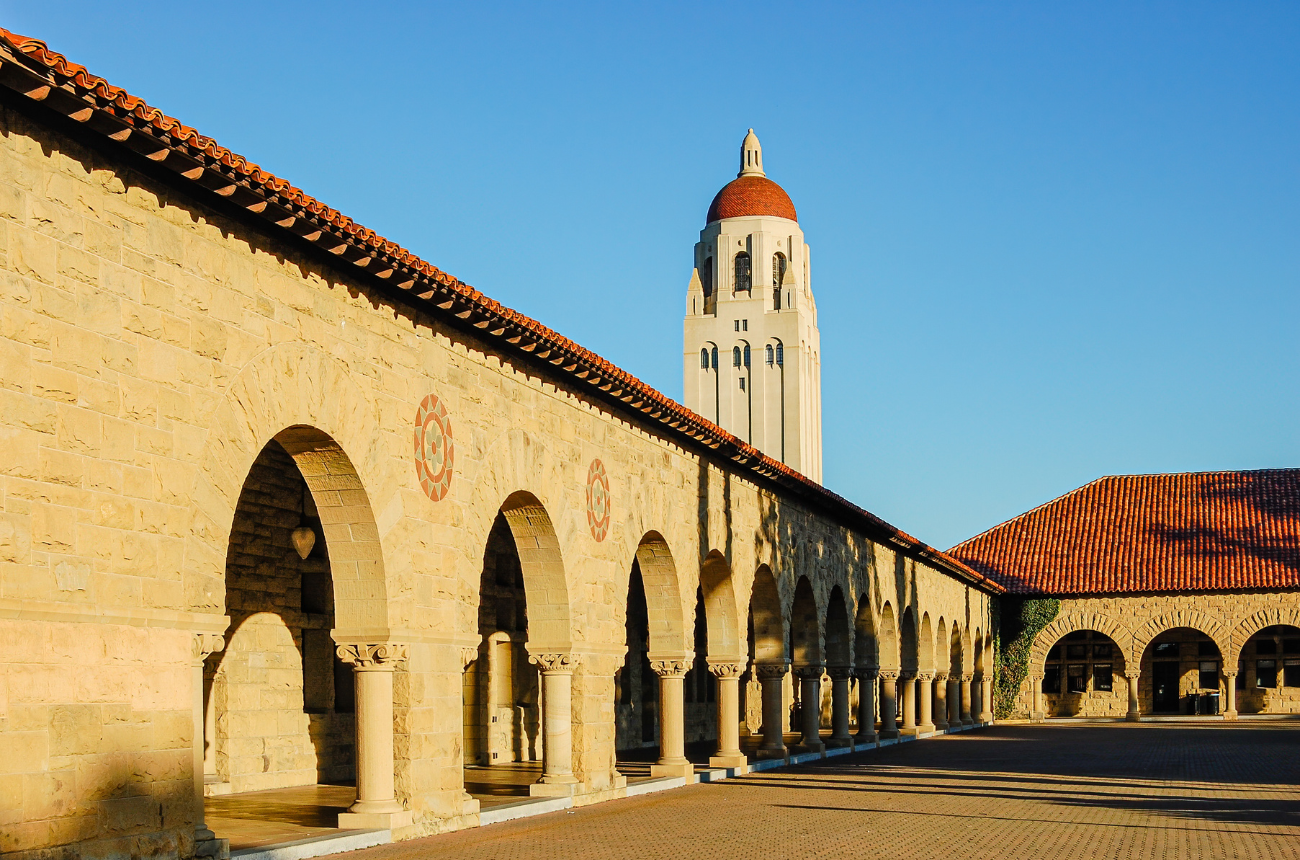
Tour of Harvard campus (optional)
Transport from Charles Hotel to Harvard Medical School
Registration
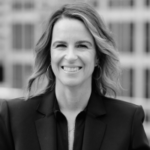
Treasurer of Massachusetts and chair of the Massachusetts Pensions Reserves Investment Management Board, Deborah Goldberg, welcomes delegates to the conference and gives insights into the social, political and investing landscape of the state.
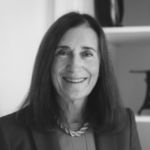
Deborah Goldberg
The role of the US on the world stage is shifting as the Trump administration reshapes the economy ahead of the 2026 US midterms. Professor Jason Furman, former chair of the Council of Economic Advisors under President Obama, will assess the US macro picture across inflation, wages and jobs. The session will frame what investors should watch as policy uncertainty feeds into rates, risk premia and cross-border capital flows.
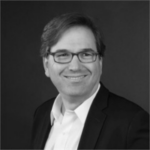
Jason Furman
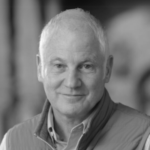
Stephen Kotkin
The US sits at the centre of the global financial system. Yet its rapidly rising debt is on track to reach a tipping point where interest costs account for more than a third of the federal budget deficit. The implications for investors are profound, given that roughly a third of US net debt is owned abroad. This panel will discuss how to position portfolios for more geopolitical turmoil amid a future of higher yields, a volatile US dollar, and a potential bond market rout that could eventually spill over into equity markets.
INCLUDES TABLE DISCUSSION

The AI transformation and modern mercantilism are rewiring the global economic and market landscape. The AI capex buildout has entered a more dangerous resource grab-phase where every player in the ecosystem are pouring capital into a race to avoid obsolescence. At the same time, long-held geopolitical alliances have frayed, trade relationships are fragmenting, and countries now see the need to invest heavily in their own defence and self-sufficiency as critical to their future. This session will consider how investors can navigate such an environment, and what levers they can pull including diversifying geographically, managing strategic AI exposure, and investing in the physical world at a time when the pressures on financial asset performance are growing, not shrinking.

Afternoon tea
Rising geopolitical tensions are reshaping traditional portfolio construction, prompting investors to reassess the role of US assets and evaluate opportunities across regions. This session will reveal how various opportunities across other regions stack up given the potential impact of tariffs, a declining US dollar, and shifting capital. It will include the outlook for real assets, including infrastructure and renewables, and which type of assets and regions remain attractive in the face of changing political cycles.

The concentration of global equity returns across a handful of US mega caps has created a structural weakness in portfolios, particularly as the AI-led profit cycle is being scrutinised. The situation could finally be changing as relative valuations and earnings growth shift the spotlight back to some unloved sectors such as small caps. Meanwhile, an increasingly fractured geopolitical and policy landscape is opening a broader opportunity set across Europe, Japan and selected emerging markets. This panel will unpack the trade-offs between reducing concentration risk without missing out on traditional sources of alpha.
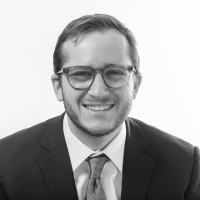
Brad Calder
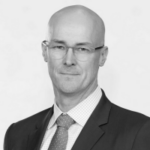
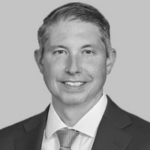
Investment returns are often cast in opposition to the needs of workers, communities, and the environment. This panel will test that assumption through case studies that examine whether addressing global structural needs can expand the opportunity set rather than dilute performance. It will examine governance, portfolio construction, manager selection and measurement, and assess why successful impact investors often back pioneer companies that are considered too risky for traditional venture capital.
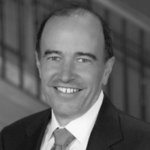
Shawn Cole
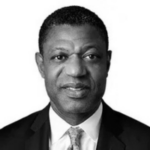
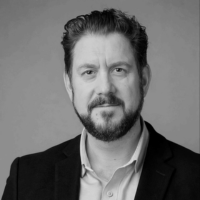
Ben Thornley
The definition of infrastructure is expanding, and the most consequential shift may be one that few asset owners have considered: the industrialisation of space. The global space economy hit a record $613 billion in 2024 and is forecast to reach $1.8 trillion by 2035, driven by plummeting launch costs, exploding satellite constellations, and orbital infrastructure becoming critical to modern economies. Satellite communications, earth observation, and space-based data services are already embedded in global supply chains, financial markets, and national security frameworks. This session includes insights from one of the most influential people in space, Professor Avi Loeb, who brings rare scientific authority and the ability to translate the long arc of space development into frameworks that matter for patient capital.
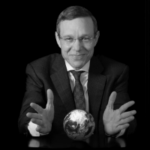
Abraham (Avi) Loeb
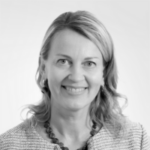
Walk to welcome function
Welcome function | Isabella Stewart Gardner Museum
Transport to Charles Hotel
Transport from Charles Hotel to Harvard Medical School
Coffee
Major economies play an outsized role in the global financial system, shaping capital flows, currency dynamics and long-term asset pricing. As sovereign debt levels, interest rate structures and funding costs evolve across markets, long-term investors are assessing the implications for portfolio resilience and strategic asset allocation. With government bonds widely held by domestic and international investors alike, changes in fiscal paths, monetary conditions and cross-border capital flows can influence financial conditions over time. For institutional investors, the focus is not on near-term policy developments but on understanding structural drivers and managing risk across cycles. This session will explore how long-horizon investors evaluate sovereign balance sheets, interest rate regimes and global capital allocation in an environment characterized by higher structural yields, currency variability and increasing economic complexity.
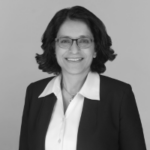
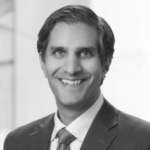
AI has become a dominant force across equity markets, but the debt-driven digital infrastructure build-out is also embedding AI exposure across public credit and private lending portfolios. This panel will examine the trend through a bondholder lens, separating disruption narratives that drive earnings expectations and the fundamentals that determine credit outcomes.
INCLUDES TABLE DISCUSSION
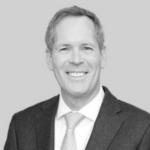
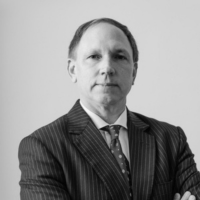
Morning tea
The Harvard Endowment is not simply an investment portfolio, but a source of stability for generations of students, generating nearly 40 per cent of the university’s annual operating revenue. In this fireside chat, chief investment officer Rick Slocum will discuss the role of the endowment’s significant allocations to hedge funds and private equity, and the implications of recently increasing portfolio risk through higher equity exposure.
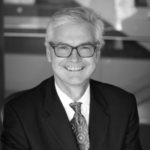
Investors are facing a rare bifurcation across markets where tech-driven share market strength masks growing stress across parts of the real economy and in pockets such as manufacturing. In this keynote from a pioneer of the distressed credit market, SVP founder Victor Khosla will explore the drivers behind this K-shaped phenomenon, how private credit has broadened from traditional distressed into special situations, and what it takes to find opportunities when the cycle is uneven
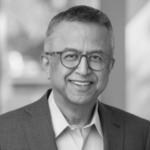
As scrutiny of private credit intensifies, leadership is increasingly judged on transparency and accountability. In this fireside chat, Blue Owl Capital co-CEO Doug Ostrover will discuss what it means to lead under a spotlight: integrating multiple businesses under a single banner, sustaining culture and investment discipline through rapid growth, and making decisions when visibility is highest.
Lunch
Private equity has crafted a perception of offering structurally higher returns than public markets that we believe is unsubstantiated by actual results. Nonetheless, investors afford private equity managers much more latitude than public equity managers on fees, time horizon, and accounting. In contrast, an argument can be made that greater dispersion of returns among private vs. public equity managers and increasing levels of capital chasing fewer investment opportunities places an even greater premium on manager selection in private equity. Aziz Hamzaogullari will explain why he shares Warren Buffett’s scepticism for private equity and his belief that public market investing can offer investors better value at lower risk.

Private equity has long benefited from a performance mystique, but as allocations have grown, asset owners need to better understand the drivers of returns and pinpoint whether manager skill, leverage, vintage exposure or other factors are doing the heavy lifting. This panel explores how quant approaches translate public-market toolkits into private equity, including peer benchmarking, driver-based attribution and diagnostics for portfolio concentration. It will consider how this evidence can sharpen governance decisions and reset expectations in LP–GP relationships.
INCLUDES TABLE DISCUSSION
Afternoon tea
AI is central to US-China competition, but it sits within a wider reordering of geopolitics, supply chains and economic policy. This discussion between former US national security adviser Jake Sullivan and Harvard Kennedy School Professor Jeremy Weinstein will unpack the changing nature of the relationship between the world's two largest economies, delve into the rivalry and cooperation that creates systemic risk, and explore several alternative geopolitical pathways facing investors.
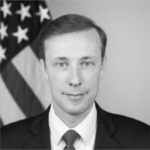
Jake Sullivan
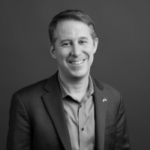
Jeremy Weinstein
Universities and policy schools are being tested as trust in expertise erodes and public debate becomes more polarised. This keynote from Jeremy Weinstein, Dean and Don K Price Professor of Public Policy at Harvard, will examine how higher education can rebuild legitimacy by reconnecting research and teaching to real-world problems, and by making civic impact more visible and accountable.
Jeremy Weinstein
Stephen Kotkin
Transport from Harvard Medical School to Charles Hotel
Conference dinner | Loeb House
Transport from Charles Hotel to Harvard Medical School
Coffee
Partnership is one of the most overused words in private markets, yet the economics often still favour the manager. This panel examines what alignment looks like when it is designed to return more value to the asset owner through fees, governance, transparency and decision making. It will unpack where truly aligned deal structures can create value and the new opportunities they can reveal.
INCLUDES TABLE DISCUSSION
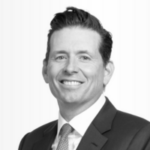
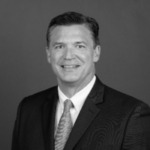
This session examines how total portfolio approach is being used to compare opportunities on a return per unit of risk basis as public and private markets converge and the opportunity set expands. It will look at how to best use private assets as building blocks in portfolio design and test the liquidity, governance and implementation frameworks required to pursue those opportunities without sacrificing resilience.
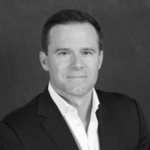
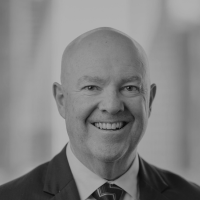
Implementing a total portfolio approach in large asset owners is like turning a tanker in a narrow channel. This panel will examine the practical mechanics of getting everyone on board aligned to the same manoeuvre. It will explore the investment opportunities that TPA can capture under a single portfolio objective, as well as new standards of decision-making, cross-team collaboration, data and analytics, and incentives.

Morning tea
The US remains the world’s home for security, capital markets and technological leadership, yet its policy direction and approach to allies and rivals is becoming harder to predict. This keynote will set out a framework for thinking through a range of future scenarios, allowing investors to separate the daily noise from the parameters that matter for portfolios.
Stephen Kotkin
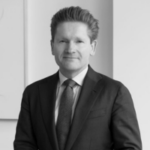
What are the most important investment decisions an investor should be making right now and what are the consequences of getting them wrong? The frameworks that guided portfolio construction for the past two decades — stable correlations, predictable rate cycles, and reliable diversification — are under stress. This session convenes senior investors to interrogate how portfolios should be built and stress-tested in an environment defined by structural uncertainty.
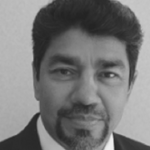
Farouki Majeed
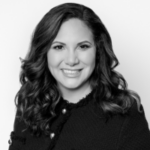
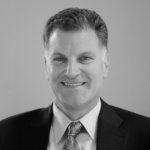
Michael Trotsky
Conference close and lunch
DELEGATE PROFILE
The Fiduciary Investors Symposium is a quarterly event for senior investment professionals at large institutional investors around the globe. The audience comprises chief investment officers and other senior investment professionals from pension funds, endowments and sovereign wealth funds from more than 20 countries.
MEDIA PARTNER
www.top1000funds.com is the news and analysis site for the world’s largest institutional investors. It focuses on strategy and implementation and is populated with original news stories, case studies and research that relate directly to the work of investment professionals at pension funds, endowments and sovereign wealth funds. One of its defining characteristics is truly global content that focuses on the strategies, portfolio construction and implementation techniques of institutional investors.
AGENDA TIMES
Monday, June 1 - Wednesday, June 3 | Conference proceedings
The Rotunda, Joseph B. Martin Conference Center
77 Avenue Louis Pasteur, Boston, MA 02115
Monday, June 1 | Welcome function
Isabella Stewart Gardner Museum
25 Evans Way, Boston, MA, 02115
Tuesday, June 2 | Conference dinner
Loeb House
17 Quincy St, Cambridge, MA 02138
ACCOMMODATION
Charles Hotel
1 Bennett St, Cambridge,
MA 02138, United States
Conference rate: USD 419/night plus tax
Click here to book the Charles Hotel
DRESS CODE
The dress code for all conference proceedings and social functions is business attire.
CONTACTS
For enquiries related to registration and event logistics, please contact the Conexus Financial events team at events@conexusfinancial.com.au
Fund managers wishing to attend must sponsor the event. To discuss sponsorship opportunities, please email sales@conexusfinancial.com.au
CODE OF CONDUCT
Conexus Financial is committed to creating a professional environment that steadfastly supports the free flow and exchange of ideas, as well as the personal safety, wellbeing, respect for, and full self-expression of all our employees, guests and partners.
We have a zero-tolerance policy for behaviour that is detrimental to any of the above, including but not limited to bullying, harassment, and discrimination of any kind.
Please confide any incidents of concern to a member of the Conexus Financial team.











Brad Calder
Shawn Cole
Jason Furman
Deborah Goldberg
Stephen Kotkin
Abraham (Avi) Loeb
Farouki Majeed
Jake Sullivan
Ben Thornley
Michael Trotsky
Jeremy Weinstein